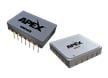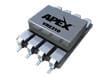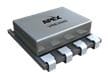
VRE3050BS

Apex Microtechnology
137-VRE3050BS
VRE3050BS

制造商:

说明:
参考电压 ref +5.0V, 1ppm, 0/70C

ECAD模型:
下载免费库加载程序,将此文件转换,以供您的ECAD工具使用。了解详情。

供货情况

库存:
无库存
生产周期:
18 周 预计工厂生产时间。
最少: 1   倍数: 1
单价:
¥-.--
总价:
¥-.--
预估关税:
此产品免运费

定价 (含13% 增值税)

数量 单价
总价
¥1,060.7988 ¥1,060.80
¥887.0161 ¥8,870.16
¥843.5902 ¥21,089.76
¥795.9042 ¥79,590.42
250 报价

产品属性 属性值 选择属性
Apex Microtechnology
产品种类: 参考电压
RoHS:  
SMD/SMT
SMD-8
Series Precision References
5 V
0.01 %
1 PPM / C
0 C
+ 70 C
Tube
商标: Apex Microtechnology
组装国: Not Available
扩散国家: Not Available
原产国: US
最大输出电压: 5.5 V
工作电源电流: 5 mA
产品类型: Voltage References
关闭: No Shutdown
工厂包装数量: 1
子类别: PMIC - Power Management ICs
单位重量: 736 mg
找到的产品:
要显示类似产品,至少选中一个复选框
要显示该类别下的类似产品,请至少选中上方的一个复选框。
已选择的属性: 0

此功能要求启用JavaScript。

USHTS:
8542390090
MXHTS:
8542399999
ECCN:
EAR99

VRE3050 +5V Low Noise Precision Voltage Reference

Apex Microtechnology VRE3050 +5V Low Noise Precision Voltage Reference is a low-cost, Zener-based precision voltage reference. The VRE3050 provides ultrastable +5V output with ±0.5mV (.01%) initial accuracy. Accuracy improvement is possible by a multipoint laser compensation technique. The device also features a buried Zener for low noise and excellent long-term stability. Temperature coefficients are as low as 0.6ppm/°C over the full industrial (0°C to +70°C) or hi-rel industrial (-40°C to +85°C) temperature range depending on the model and grade. This series is housed in a surface mount 8-pin package. The Apex Microtechnology VRE3050 provides maximum long-term stability and is recommended for 14-, 16-, or 18-bit D/A converters requiring an external precision reference. The device is also ideal for calibrating scale factors on high-resolution A/D converters.

Precision Reference Devices

Apex Microtechnology Precision Reference Devices provide ultrastable sine wave outputs and a temperature coefficient over the full military temperature range. Accuracy improvement of the Apex Microtechnology Precision Reference devices is possible through a unique proprietary multipoint laser compensation technique. Significant improvements have been made in other performance parameters, including warm-up drift, line regulation, and long-term stability.